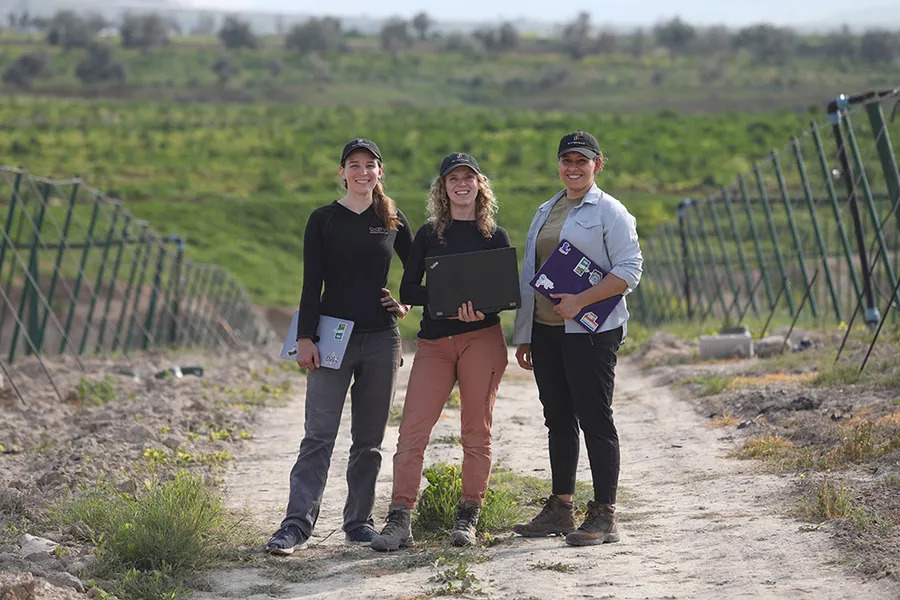
Placing solutions in the cloud but learning with boots on the ground, GEAR Lab researchers build low-cost, solar-powered irrigation tools to make precision agriculture more accessible.
Precision Agriculture: Transforming Modern Farming
In agriculture today, robots and drones can monitor fields, temperature and moisture sensors can be automated to meet crop needs, and a host of other systems and devices make farms more efficient, resource-conscious, and profitable. The use of precision agriculture, as these technologies are collectively known, offers significant advantages. However, because the technology can be costly, it remains out of reach for the majority of the world’s farmers.
The Challenges for Smallholder Farmers
“Many of the poor around the world are small, subsistence farmers,” says Susan Amrose, research scientist with the Global Engineering and Research (GEAR) Lab at MIT. “With intensification of food production needs, worsening soil, water scarcity, and smaller plots, these farmers can’t continue with their current practices.”
The Global Water Crisis
By some estimates, the global demand for fresh water will outstrip supply by as much as 40 percent by the end of the decade. Nearly 80 percent of the world’s 570 million farms are classed as smallholder farms, with many located in under-resourced and water-stressed regions. With rapid population growth and climate change driving up demand for food, and with more strain on natural resources, increasing the adoption of sustainable agricultural practices among smallholder farmers is vital.
Making Mechanized Practices Accessible
Amrose, who helps lead desalination, drip irrigation, water, and sanitation projects for GEAR Lab, says these small farmers need to move to more mechanized practices. “We’re trying to make it much, much more affordable for farmers to utilize solar-powered irrigation, and to have access to tools that, right now, they’re priced out of,” she says. “More crop per drop, more crop per area, that’s our goal.”
Leave a Reply